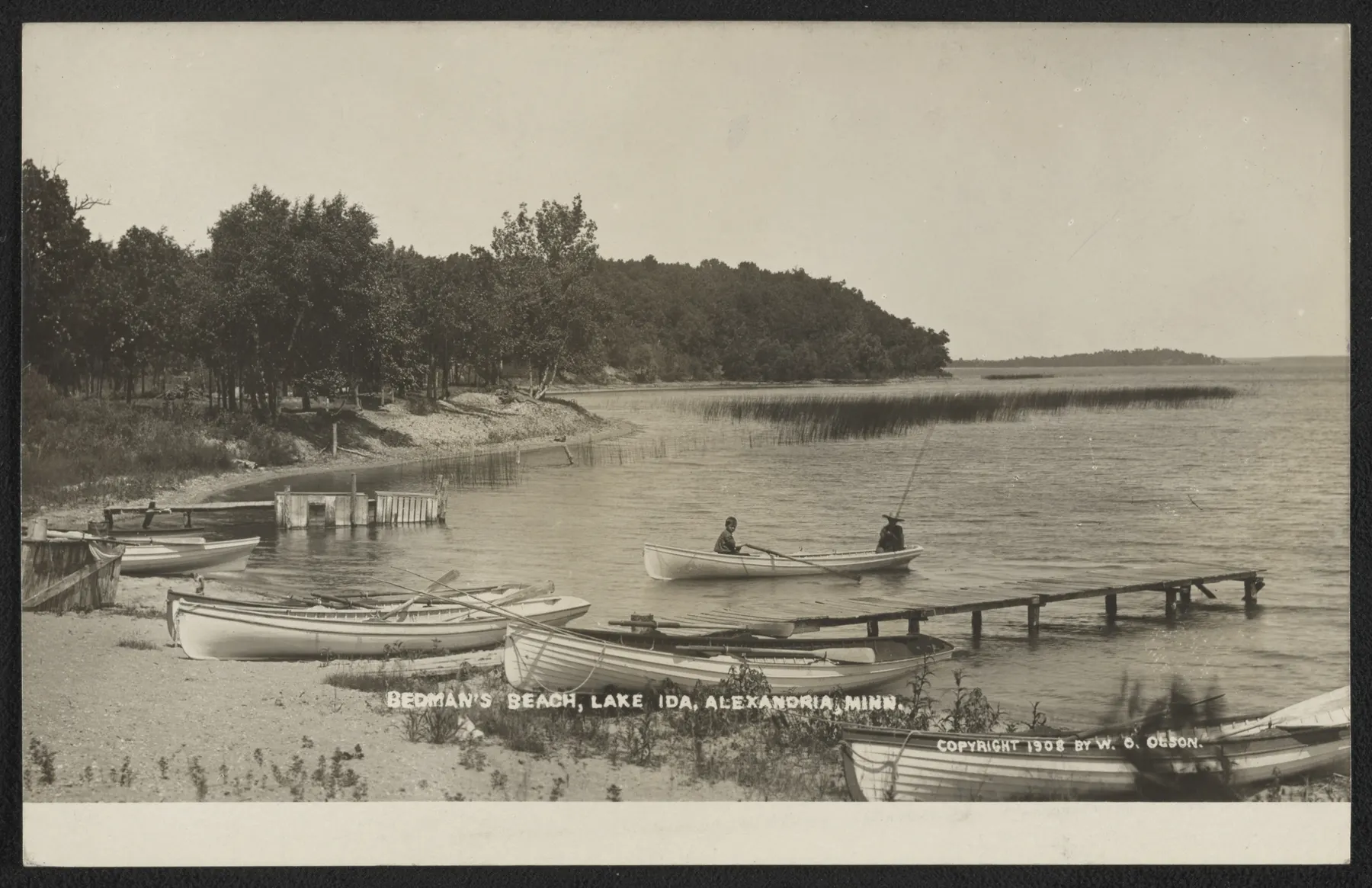
After 1950, the lake stopped belonging to the clubs and the resorts and started belonging to anybody with a lot, a paycheck, and a free weekend.
For half a century, Lake Miltona sorted its visitors into two kinds. There were the club men, who owned their shore outright and came back to the same clubhouse every summer. And there were the resort guests, who rented a housekeeping cabin by the week and let somebody else own the beach. After the Second World War, a third kind of person showed up and changed the lake for good: the family that bought a lot and built its own place.
The shift was not local. It was statewide, and the numbers are plain. Minnesota's shoreland history, kept by the Department of Natural Resources, records that the state had about 73,000 seasonal lakeshore homes in 1960, a 70 percent increase over 1950. That figure counts the whole state, not just this lake. But Lake Miltona rode the same wave as every other lake in Minnesota, and you can still read the wave from a boat.
What arrived was not grand. The DNR's history describes the building of that era without romance: small seasonal cabins under 1,000 square feet were common through the 1960s and 1970s, and many homes and cabins went up on small lots close to the water. The postwar cabin was not built to impress anyone. It was built to get a family as close to the lake as the lot allowed, with a roof, a stove, and room for the kids. Better roads, ordinary cars, and paid vacations did the rest. A family no longer needed a club membership or a resort reservation. It needed a deed.
On Lake Miltona, the boom shows in the plats. Subdivision names from the county record, Miltona Shores on the south shore, Hidden Valley on the Leaf Valley side, Steidls Miltona Beach, mark where farmland and old shore were cut into lots a working family could buy. The record gives the names plainly. It does not give neat founding dates for them, and this piece will not invent any. What the plats say is enough: the shoreline was being divided into pieces small enough to own.
The old order did not vanish overnight. It overlapped. In 1962, Art and Fran Weller moved to Lake Miltona and bought Sandy Beach Resort, which they owned and operated, according to Frances Weller's obituary. A resort purchase in 1962 is the boom era in miniature. The Wellers were running rented cabins on one stretch of shore while, lot by lot, private cabins were rising on the stretches around them. For a while the two lakes, the rented one and the owned one, existed side by side.
The lake's amusements kept pace with the new owners. Garland and Leita Shields bought the Peter Jerome farm, between Highway 29 and the east end of the lake, in November 1963, and the Lake Miltona Golf Club opened on it in the summer of 1965. A golf course is not a resort and not a cabin. It is what a shoreline builds when the people on it have stopped visiting and started staying. The resorts that remained worked the same years: postcards survive for Stodden's Resort in the 1950s and 1960s and for Tip Top Cove around 1955, the old trade carrying on inside the new one.
The boom reached backward as well as forward. The Chain Cottage had stood on the lake since 1926, built up on stilts without a porch, and one family kept it for a century. It did not get running water and electricity until a 1960s update. That was the cabin boom arriving at an old address: the postwar money and postwar habits finally wiring and plumbing a cottage that had done without for nearly forty summers.
Something was gained in those years, and something was spent. What was gained was access. The lake stopped being a rich man's club water or a renter's week and became a place ordinary families held in their own names, fixed up a little more each summer, and handed down. What was spent was the openness. A shore of scattered clubs and resorts, with long quiet stretches between them, became a shore of lots, each one spoken for. Minnesota noticed the crowding soon enough. The state passed its Shoreland Management Act in 1969, and the rules that followed set the terms for everything built after. That fight belongs to the longer story of how this lake was built. Here it is enough to say the boom is what made the rules necessary.
Count the result today and the boom is the lake. The Lake Miltona Association counts just over 600 properties platted around the water. Six hundred deeds where the survey left squares, where the railroad held every other section, where the clubs fenced their bends and the resorts rented their cabins by the week. Most of what stands on this shore now was put there by the third wave, the families who came after 1950 with a lot and a plan and built small and close.
Drive the shoreline roads at the end of a summer day and the era is still legible. The little cabins sit where they were planted, some of them grown since into year-round homes, some of them still exactly what they were: a small house, close to the water, holding a family's summers. The clubs had their lake. The resorts had theirs. The cabin boom gave the lake to everybody else.
Visiting the story
- The Lake Miltona Association counts just over 600 properties platted around the lake, most of them products of the postwar decades.
- The public accesses put you on the same 5,731 acres the club men, the resort guests, and the cabin families took turns calling their own.
- See it yourself: get out on a public access and look back at the shore. Six hundred lots of postwar summers are the view.
Spot an error? Read our corrections policy.