Legends of the Lake
The Man Who Found the PrairieBy the story Parkers Prairie tells, he climbed a tree, saw the prairie first, and never lived to see the town that took his name.
Start with the man in the tree.
The country southeast of what is now Otter Tail County, in 1867, was dense timber and marsh, the kind of ground a man crosses slowly and reads badly from inside it. You could walk all day under those trees and learn almost nothing about where you were. So, by the usual telling, Parker climbed one.
He was a surveyor, working with Warren Adley of Osakis, and the two men were blazing a trail into the county when they came up out of the timber onto open ground. From the branches, the story says, Parker saw it first: a broad, beautiful prairie, and a lake lying along its edge. The prairie took his name. The lake took Adley's. Parkers Prairie and Lake Adley, named, if the story holds, by the two men who stood looking at them, one of them still up a tree.
That is the founding story of Parkers Prairie, and the town tells it about itself with its eyes open. The city's own history page gives the trail and the prairie as fact, then stops and labels the best part honestly: "Legend has it that they climbed a tree."
What the paper record actually says
Strip the legend back to the documents and a harder, thinner story remains, and it is worth telling straight.
Homesteaders arrived in 1868, staking their claims mostly along the edge of the prairie, which is exactly where a man up a tree would have told them to go: timber for building and fuel on one side, open grass for the plow on the other. A general store opened on the shore of Lake Adley, run by Henry Asseln, and the township's first election was held in it. The township organized on January 4, 1870, under a different name entirely. It was called Jasper.
Three years later the Minnesota Legislature fixed that. By a special act approved March 1, 1873, Jasper Township became Parkers Prairie, and the 1916 History of Otter Tail County prints the act's wording in full. Warren Upham's Minnesota Geographic Names, published by the Minnesota Historical Society in 1920, says the new name honored an early settler on the township's principal prairie. The village followed its own slower clock: platted in the summer of 1880, incorporated in 1903.
Notice what the paper record does not contain. The 1916 county history, which gives the township two careful pages, never mentions a tree, a climb, or a drowning. Upham gives the name a settler and no story at all. Everything vivid about Parker comes down through local telling rather than documents, and the closer a source sits to the town, the more of the story it tends to carry.
The river on the way home
Here is the part of the story that turns a naming tale into a legend, and it has to be handled the way the town's own sources handle the tree: as tradition.
By the usual telling, the survey party's work ended and the men started back for Osakis. On the way home they had to cross the Long Prairie River, and Parker, the man who had seen the prairie first, drowned in the crossing. The county genealogy history carries the drowning plainly, in a single sentence, right after the tree. The city's history page does not carry it at all. No contemporary record of the death has been published that we could find, no grave, no date beyond the 1867 journey itself.
Even the man's full name is thinner than a reader would like. The early sources know him only as Parker. A modern Otter Tail Lakes Country account gives him as Newton S. Parker, calls him a Civil War veteran, and says he and Adley laid out the roadway that brought settlers to the lakes. That may be exactly right. It is also, so far, one account, written more than a century and a half after the climb, and this piece prints it as that and nothing more.
So the honest version runs like this. A surveyor named Parker worked this ground with Warren Adley in 1867, and the prairie carries his name to this day; that much the naming record supports. The tree, the first sight of the prairie, and the river on the way home are the story the town tells about him, repeated for generations and never, so far as the published record shows, written down by anyone who was there.
The town that kept the name
Whatever Parker was, the place he is said to have found became real fast. Within three years of the first claims, settlers of Swedish, German, Irish, Scotch, and English descent had taken up the open land, and Parkers Prairie grew into a farming town that has kept its shape ever since: a main street, a city park, a school, and Lake Adley at its edge, where the first store stood.
The town remembers the trail, if not every detail of the man. In Monument Park, across from the lake, a fieldstone marker raised in the 1930s carries a bronze plaque: "This Tablet marks the terminus of the first trail into Southeastern Otter Tail County and the Parkers Prairie Settlement." The marker does not mention a tree. It does not need to. Everybody in Parkers Prairie already knows what the man at the end of that trail is supposed to have done, and the plaque's restraint and the legend's color have shared the town between them for a hundred years.
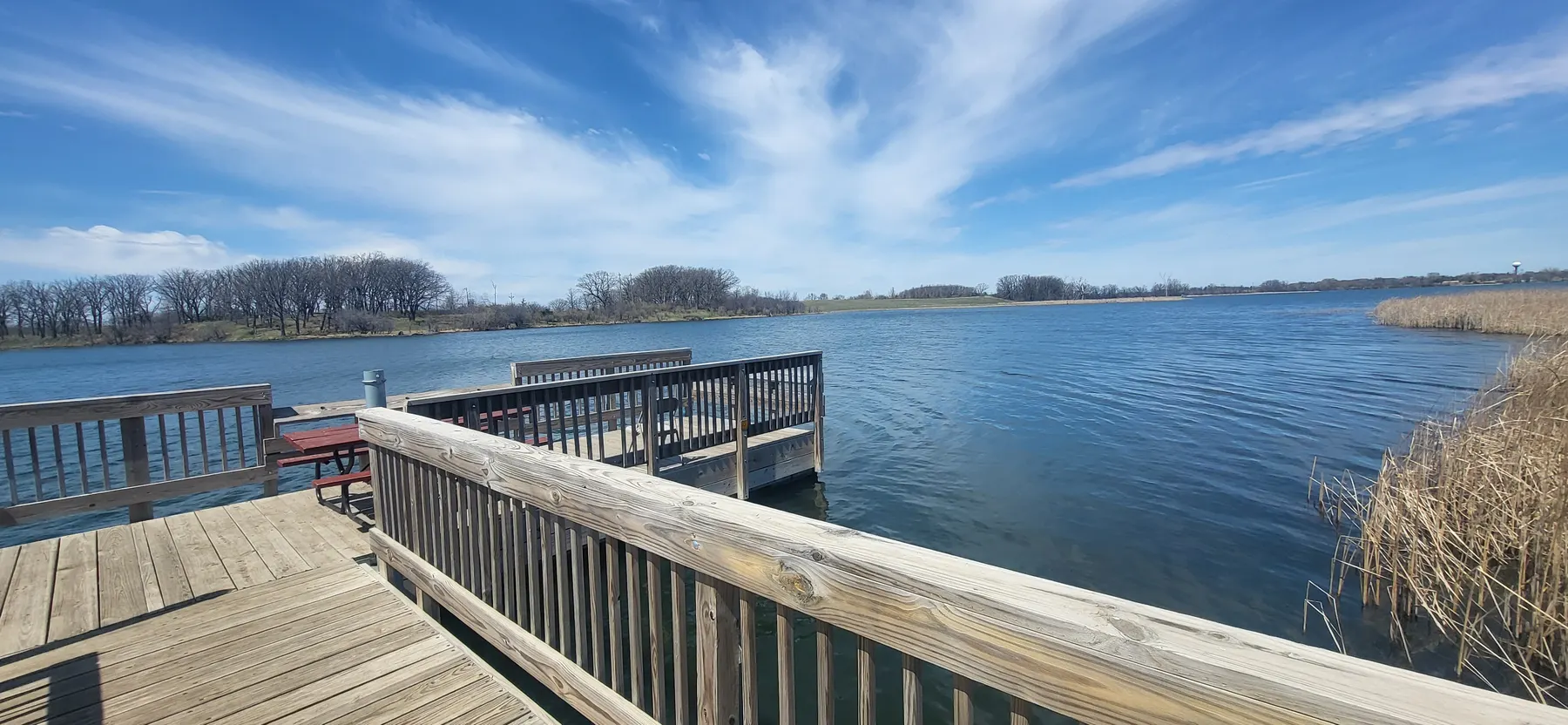
He got the prairie. Adley got the lake. The lake is still there at the edge of town, with a park, a fishing pier, and a boat ramp, and families swim and launch boats on the name of the man who made it home. The man who did not hangs over the whole map anyway, in four syllables over every envelope and road sign: Parkers Prairie, a town named for a surveyor who, by the story his town tells, saw it first and never saw it again.
See it yourself: stand at the fieldstone marker in Monument Park in Parkers Prairie and read the plaque, walk the trail down to Lake Adley Park for the fishing pier and the shore where the first store stood, and finish at the Parkers Prairie Aquatic Center in City Park, the pool the town built for itself a century after the trail came through.
Spot an error? Read our corrections policy.